
A mid-sized foundry client of mine spent four years producing a competent annual sustainability report that, as far as anyone could tell, nobody read. Then their European customer's procurement team sent a supplier questionnaire with a scope 1 and 2 emissions disclosure requirement, a scope 3 estimate, and a request for third-party assurance. Two months later their lender's revised facility agreement included a sustainability-linked margin adjustment.
Nothing about their operations changed. The commercial consequence of their environmental position changed entirely.
The three channels that make this real
Capital. Sustainability-linked loans now carry margin ratchets tied to defined performance indicators. Miss the target and the interest rate steps up. That is a line item on the income statement, and it converts an ESG discussion from a values conversation into a treasury one very quickly.
Market access. The EU's Carbon Border Adjustment Mechanism moved into its definitive phase and it hits precisely the exports South Africa sends north — iron and steel, aluminium, cement, fertiliser. If your embedded emissions per tonne are higher than a competitor's, the levy makes you more expensive at the border regardless of your factory-gate price. Grid intensity is not something a single manufacturer controls, which is exactly why the ones who have moved on self-generation have a defensible commercial story.
Licence to operate. Social performance is the one that stops production. Community disruption at operations in Limpopo and the North West has cost more shift hours in the last five years than most equipment failures. The environmental authorisation is the legal licence; the relationship with the community around the fence is the practical one.
Governance is where the actual failures sit
The G is treated as the dull one and it produces the most damage. Procurement irregularity, undeclared conflicts of interest, weak delegation of authority frameworks, board committees that meet but do not interrogate.
Under King IV the board carries responsibility for the ethical culture, and the practical test is uncomfortable: can your organisation demonstrate what happened to the last five whistleblower reports? Not that a hotline exists. What was reported, who investigated, what the outcome was, and how long it took.
Where that record does not exist, no amount of environmental performance compensates.
What I would prioritise with a limited budget
Most mid-sized South African operations cannot do everything at once. A defensible sequence:
- Get a credible scope 1 and 2 emissions inventory with documented methodology and activity data you can reproduce. Everything downstream depends on it, and estimates that cannot be evidenced will fail assurance.
- Understand your carbon tax position properly, including allowances, and model the trajectory as allowances tighten. This is a known future cost that most finance teams have not built into their five-year plan.
- Map your water risk at catchment level, not at the meter. Several industrial areas are on constrained systems and an allocation reduction is a production risk, not an environmental one.
- Fix the governance basics — conflict of interest declarations, delegation of authority, and a functioning ethics reporting record.
- Only then invest in reporting frameworks and ratings.
The order matters. I have watched an organisation spend heavily on GRI-aligned reporting while its emissions inventory was built on supplier estimates it could not substantiate. The report was beautiful and the first serious assurance review dismantled it.
The energy transition is a capital allocation question
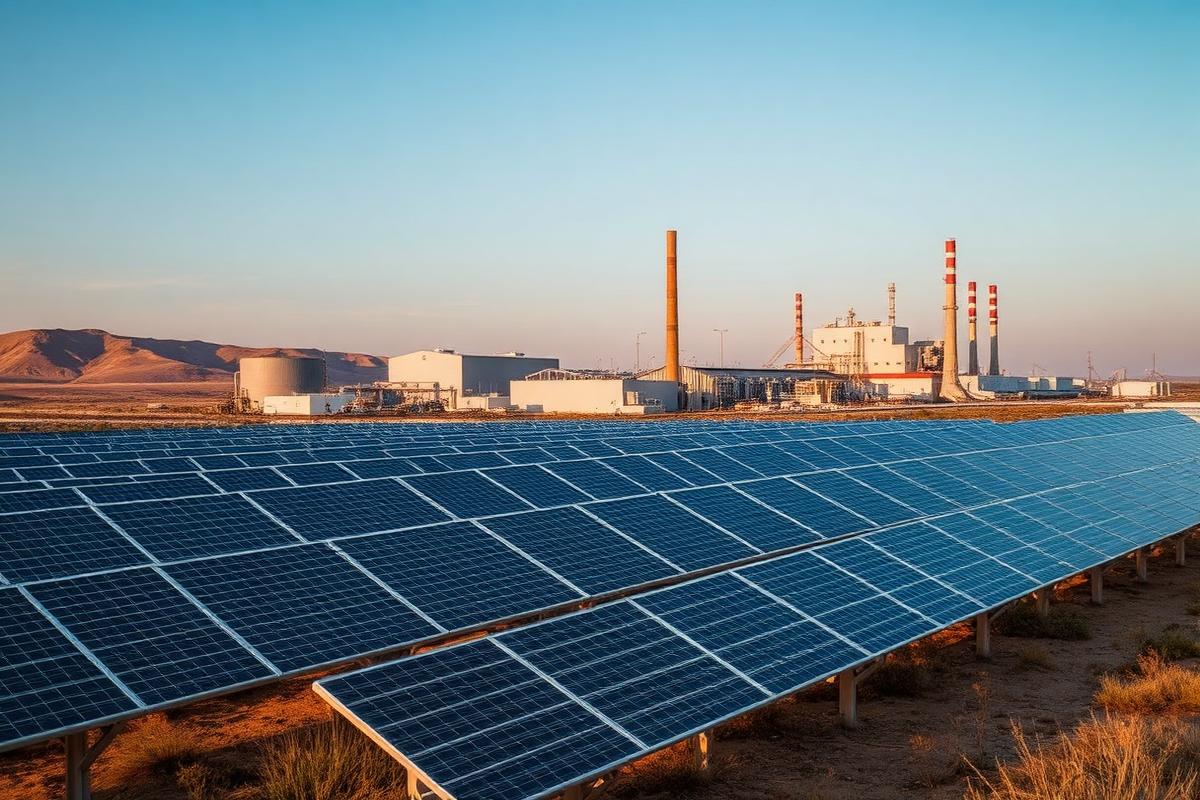
Framing decarbonisation as an environmental initiative gets it funded out of the wrong budget and killed in the wrong committee. Framed as energy cost and security of supply, the same project — a 6 MW solar installation with storage, say — competes on payback against other capital and usually wins on its own merits.
The emissions reduction becomes a secondary benefit that happens to satisfy a lender covenant. That is a considerably easier internal sell than asking for money to be green.
The honest summary
ESG as a reporting genre deserved much of its scepticism. ESG as a set of quantified commercial exposures — carbon tax, border levies, cost of capital, community stoppages, water allocation — is simply operational risk under a fashionable name. Treat it that way, put it in front of the same people who assess any other risk, and the arguments about whether it matters tend to stop.